
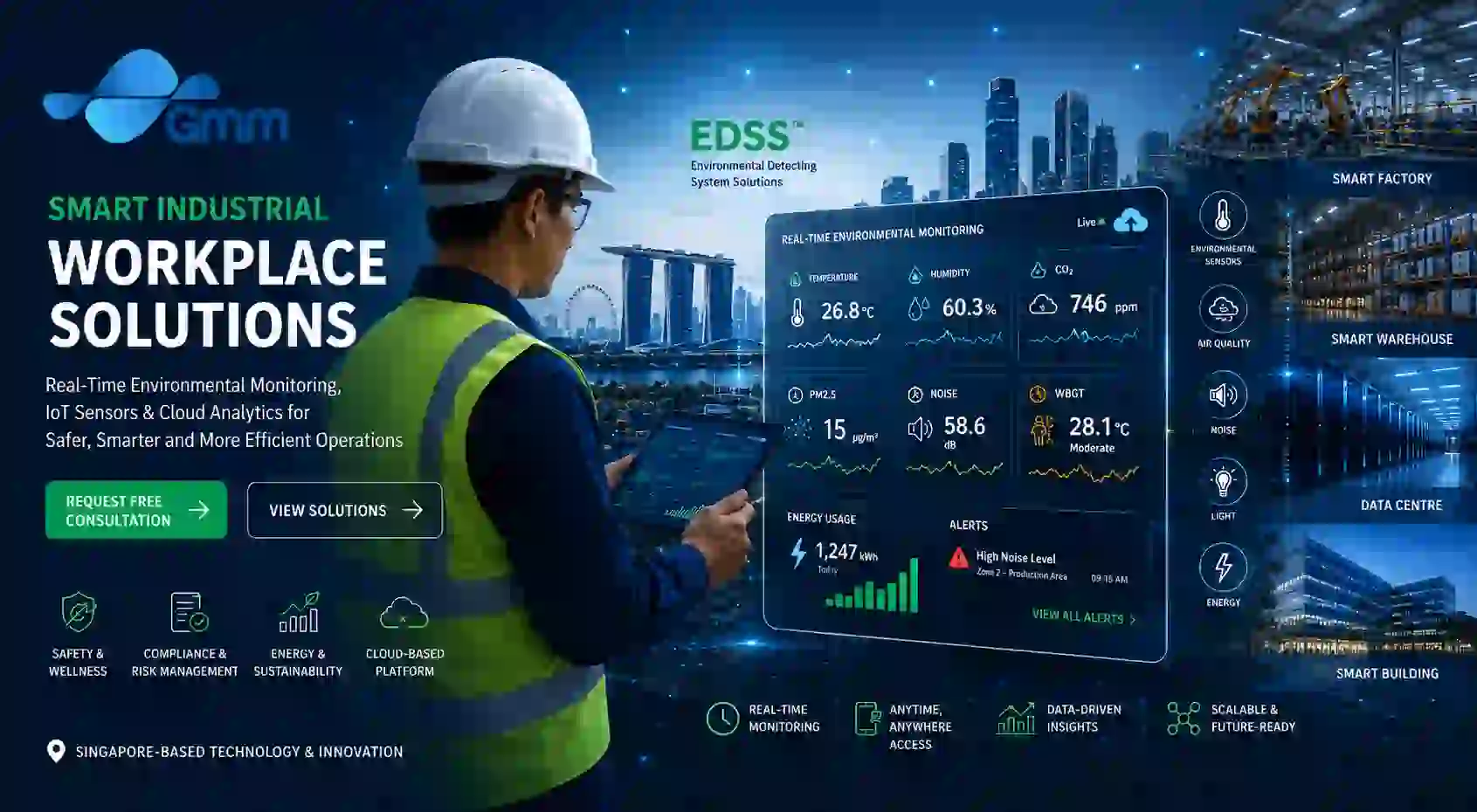
Essential Tools and Insights for Optimal Operations
In today’s fast-paced industrial environment, a smart industrial workplace represents not just a trend but a necessity. Companies that adopt smart technologies are finding innovative ways to enhance productivity while promoting safety within their operations. GMM Technoworld, a frontrunner in environmental detecting systems and monitoring solutions in Singapore, provides essential insights into the foundational elements of achieving this transformation.
The idea of a smart industrial workplace is rooted in the integration of sophisticated technologies that streamline operations and provide critical data for decision-making. GMM Technoworld emphasizes the role of connected technology and data-driven insights, which facilitate informed operational choices and enhance overall organizational efficiency. This transformation not only involves technology adoption but also a cultural shift towards embracing innovation as a core value.
Importance of Technology in Industrial Settings
Furthermore, the integration of artificial intelligence (AI) and machine learning (ML) into industrial applications has revolutionized operations. AI algorithms can analyze vast amounts of data quickly, allowing companies to make informed decisions based on predictive analytics. For example, predictive maintenance powered by AI can foresee potential equipment failures, thus minimizing unplanned downtimes and saving costs. This proactive approach is essential for maintaining a competitive edge in the industrial sector.
The cultural aspect of embracing a smart industrial workplace cannot be overlooked. Companies that successfully integrate technology often foster a culture of innovation, where employees are encouraged to share ideas and experiment with new approaches. This openness to change can lead to creative solutions that significantly enhance operational efficiency. For instance, companies that implement feedback loops can gather insights directly from frontline workers, who can provide valuable perspectives on operational challenges and opportunities for improvement.
Moreover, the importance of training and development in a smart industrial workplace is crucial. As technology evolves, so must the workforce. Continuous training programs that focus on emerging technologies, safety protocols, and operational best practices are essential to equip employees with the skills needed to thrive in a tech-driven environment. This investment in human capital not only boosts employee morale but also enhances overall productivity and job satisfaction.
Additionally, the role of cybersecurity in a smart industrial workplace cannot be ignored. As businesses adopt more connected devices and systems, they become more vulnerable to cyber threats. Implementing robust cybersecurity measures is vital to protect sensitive data and maintain operational integrity. This includes regular security audits, employee training on cybersecurity best practices, and the use of advanced encryption technologies to safeguard information.
Investing in employee well-being is another critical aspect of fostering a smart industrial workplace. Companies that prioritize the health and wellness of their employees often see a significant boost in productivity and morale. Initiatives such as ergonomic workstations, mental health support, and flexible working arrangements can contribute to a more engaged and motivated workforce. For example, firms that offer wellness programs report lower absenteeism rates and higher employee retention, resulting in substantial cost savings over time.
The smart industrial workplace is also a key player in driving sustainable practices. By utilizing smart technologies to monitor and manage resources, businesses can significantly reduce their environmental footprint. For instance, smart sensors can optimize energy consumption by adjusting lighting and temperature based on occupancy levels. Furthermore, industries can leverage data analytics to identify waste patterns and implement strategies to reduce waste, contributing to a more sustainable future.
Collaboration between departments is another advantage of a smart industrial workplace. Enhanced communication tools facilitate better collaboration and information sharing within teams, leading to informed decision-making and quicker problem resolution. For example, integrated platforms that allow real-time collaboration enhance transparency and accountability among teams, resulting in improved project outcomes and efficiency.
Furthermore, customer engagement is enhanced through a smart industrial workplace. By leveraging data analytics and CRM systems, businesses can gain insights into customer preferences and behaviors, allowing for more personalized offerings. For instance, a company that uses data to understand customer trends can tailor its products and services to meet specific needs, thereby increasing customer satisfaction and loyalty.
Finally, the smart industrial workplace is continuously evolving. Staying ahead of technological advancements is crucial for long-term success. Companies must remain adaptable and open to change, regularly assessing their technological landscape and exploring new solutions that can further enhance their operations. This proactive approach will ensure that businesses remain competitive and resilient in the face of industry challenges.
Today’s industrial landscape is rapidly changing, driven by the need for efficiency and innovation. Technology plays a pivotal role in reshaping how businesses operate. From automation systems to advanced robotics, technology enables industries to streamline processes, reduce operational costs, and improve product quality. For instance, the introduction of automation in assembly lines has not only increased production speed but also minimized human error, ensuring a higher consistency in product quality. As such, the importance of technology cannot be overstated in the pursuit of a smart industrial workplace.
The Future of the Smart Industrial Workplace
A smart industrial workplace, as articulated by GMM Technoworld, transforms traditional operational models by leveraging advanced technologies such as IoT devices, AI analytics, and integrated communication systems. By weaving these technologies into the fabric of daily operations, businesses can achieve a higher level of connectivity and insight that was previously unattainable. This holistic approach places a strong emphasis on empowering employees and optimizing their environments to foster productivity.
Key to the smart industrial workplace is the concept of Real-time Detection. This aspect is crucial for maintaining operational efficiency as it allows businesses to monitor environmental conditions, equipment performance, and security measures continuously. GMM Technoworld’s commitment to real-time monitoring ensures that businesses can promptly identify and address any issues that arise, thus minimizing potential risk. For example, using smart sensors, industries can track machinery health, allowing for predictive maintenance that reduces costly downtime and prolongs equipment lifespan.
The capacity to Reduce Risk is another significant advantage of an intelligent workplace. By integrating security and environmental detection systems, businesses can proactively mitigate threats that could jeopardize safety and operational integrity. GMM Technoworld’s systems monitor vital environmental factors, such as air quality and temperature, ensuring compliance with safety standards. This allows organizations not only to protect their assets but also to maintain a healthy work environment for employees, thereby enhancing productivity and morale.
On a broader scale, the smart industrial workplace concept aligns with sustainability goals. By implementing smart technologies, industries can monitor resource consumption in real-time and identify areas for improvement, leading to reduced waste and energy efficiency. This is increasingly important as businesses strive to meet regulatory requirements and societal expectations for environmentally responsible operations.
Moreover, the integration of AI and machine learning into these systems allows for advanced analytics that can predict future conditions based on historical data. For instance, AI algorithms can analyze patterns in equipment usage and performance, leading to optimized maintenance schedules that align with production demands. This not only saves costs but also enhances production reliability, paving the way for a truly smart industrial workplace.
The Cloud Network serves as the backbone of a smart industrial workplace by offering scalable and flexible solutions. GMM Technoworld highlights that the cloud infrastructure is essential for handling the extensive data generated by monitoring systems. With cloud technology, businesses can analyze and interpret data in real-time, enabling faster decision-making and efficient resource management. For example, data collected from various sensors can be aggregated and analyzed to optimize production schedules, reducing waste and improving operational efficiency.
The power of Instant Alerts cannot be underestimated. By providing immediate notifications to relevant stakeholders, smart systems enable organizations to react swiftly to critical incidents. This proactive communication streamlines response efforts, significantly reducing potential damage or operational downtime. For instance, if a hazardous gas is detected, real-time alerts can trigger immediate evacuation protocols, ensuring safety and compliance.
Finally, embracing a smart industrial workplace fosters a culture of continuous improvement and innovation. By utilizing real-time data to inform decisions, organizations can adapt quickly to market changes, customer demands, and emerging technologies. This agility not only enhances competitiveness but also motivates employees to engage actively in the operational processes, knowing that their contributions can lead to tangible improvements.
In conclusion, GMM Technoworld’s vision for the smart industrial workplace is built on the foundation of integrating cutting-edge environmental detecting and monitoring solutions. These solutions not only enhance operational efficiency but also promote a culture of safety and responsibility. By adopting a smart industrial workplace approach, industries can position themselves at the forefront of innovation, ensuring their operations are efficient, secure, and continuously optimized for future challenges. The commitment to leveraging technology for better outcomes is crucial in today’s competitive landscape, offering businesses a significant advantage as they navigate an increasingly complex industrial environment. Embracing new technologies, fostering a culture of continuous improvement, and prioritizing employee well-being are essential components of achieving a truly smart industrial workplace.
FAQs
What is an example of a smart industrial workplace technology?
IoT-enabled sensors for real-time monitoring and predictive maintenance.
What are the three components of a smart factory?
The three components of a smart factory are:
Internet of Things (IoT)
Artificial Intelligence (AI) and Machine Learning
Big Data and Analytics
What is an industrial workplace?
An industrial workplace is a setting where manufacturing, processing, or other industrial activities take place, typically involving machinery and equipment for production or assembly, often characterized by large spaces, specialized workstations, and safety regulations.